Maybe it is leaning a bit too close to the roof. Maybe the roots are starting to bully the driveway. Maybe you just want more light in the yard and you are sick of sweeping leaves every weekend. And then the thought pops up.
How hard can it be?
A ladder. A chainsaw. A mate to “spot” you. A quick Saturday job.
And yeah, I get why people go there. Sydney is expensive. Trades are booked out. Everyone wants to save money. But this is one of those jobs where the “savings” can turn into a hospital visit, a smashed roof, a downed powerline, or a very awkward conversation with your insurer.
This is why arborist-led tree removal is such a big deal on Sydney properties. Not because DIY people are lazy or clueless. It is because trees are heavy, unpredictable, and connected to the most expensive parts of your home. And a lot of Sydney blocks are tight, sloped, or close to neighbours. For homeowners seeking expert guidance on tree management, safety assessments, and removal strategies, check out more about professional arborist services in Sydney and how qualified specialists can help protect both property and surrounding landscapes.
So here are five real reasons arborist-led tree removal is safer than doing it yourself. Not in theory. In the real, Sydney backyard sense.
1. Trees do not fall how you think they will
Most DIY attempts start with a simple assumption. You cut the trunk, the tree falls in the direction you want. Kind of like the movies.
In reality, trees do what physics tells them to do. Not what you want. Weight distribution matters. Wind matters. Hidden decay matters. Limb loading matters. Even how the canopy is shaped can pull the trunk off line when it starts to go.
Arborists read a tree before they touch it. They look for lean, check the crown balance, identify deadwood, assess rot pockets, and think about hinge wood and barber chair risk. They are not guessing. They are predicting. You may like to visit https://www.environment.nsw.gov.au/topics/animals-and-plants/threatened-species/nsw-threatened-species-scientific-committee/determinations/final-determinations/2000-2003/removal-of-dead-wood-and-dead-trees-key-threatening-process-listing to learn more about removal of dead wood and dead trees – key threatening process listing.
And in Sydney, this gets even trickier because a lot of trees are older, established specimens. Big gums, paperbarks, figs, palms. Some have been quietly failing for years without showing obvious signs from the ground.
With arborist-led tree removal, the plan is usually to dismantle the tree in sections, with controlled rigging, instead of attempting a dramatic single fall. That is the safety difference right there. Small, controlled pieces. Not one giant uncontrolled event.
2. Tight Sydney blocks make “drop zones” basically imaginary
If you have a big rural block, you can sometimes get away with letting sections drop. But most Sydney properties do not have that luxury.
You have fences. Neighbouring roofs. Granny flats. Pools. Sheds. Clotheslines. Pavers. Outdoor kitchens. Powerlines. And those narrow side access paths that barely fit a wheelie bin.
Even if you think you have space, you probably do not have a real drop zone for a heavy limb. A branch can bounce. Roll. Swing. Or punch straight through a pergola roof like it is cardboard.
This is where arborist-led tree removal earns its money. Arborists use ropes, pulleys, lowering devices, friction controls, and sometimes cranes depending on access and risk. They can lower pieces down gently, away from structures, and away from people.
DIY is usually the opposite. Cut and hope. And hope is not a safety plan, especially when the nearest thing to your “drop zone” is your neighbour’s skylight.
3. Chainsaws and ladders are a bad mix, and most DIY accidents start there
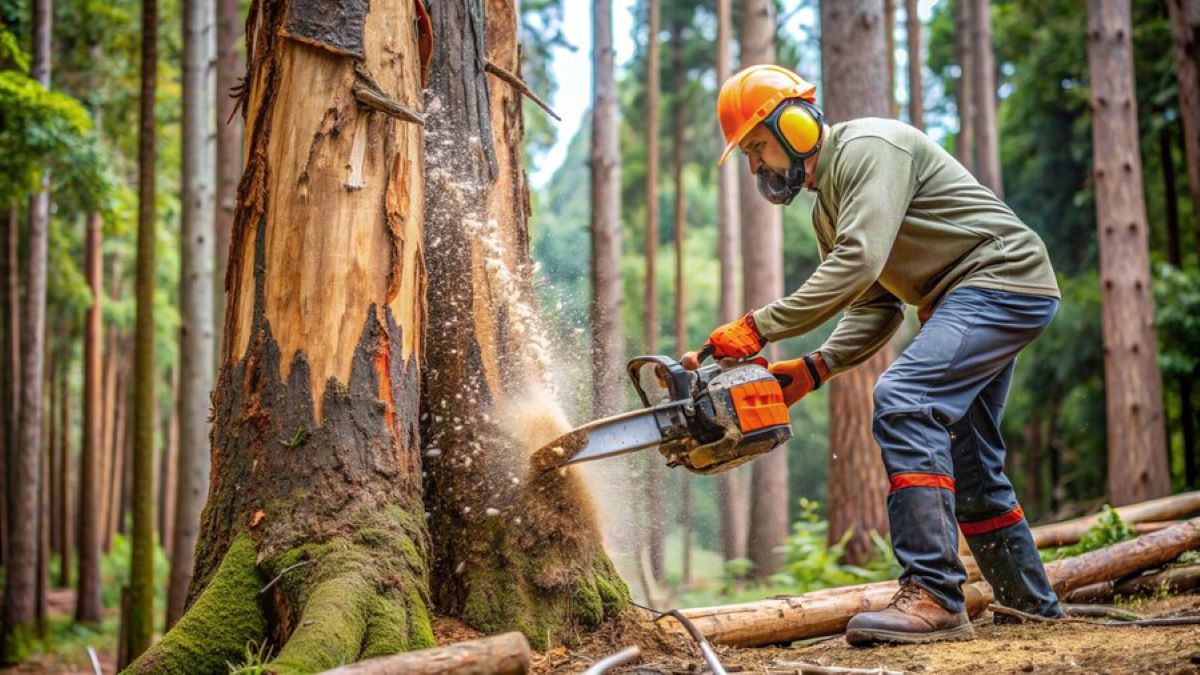
I am going to be blunt. Chainsaws are not forgiving tools. And when you combine them with ladders, uneven ground, and overhead cutting, things get dangerous fast.
A common DIY scene goes like this:
You climb up to “just take off a few branches”. The ladder sinks a little into the soil. You reach too far. The branch moves when you cut it, because it is under tension. Your balance shifts. Now you are holding a running saw and trying not to fall.
Even a small slip can be catastrophic. Lacerations, broken wrists, head injuries, spinal injuries. And if you are alone, it can get worse because nobody is there to call for help quickly.
Arborist-led tree removal typically involves trained climbers or elevated work platforms, proper anchor points, PPE, and procedure. And it involves a team. Someone on the ground watching. Someone controlling ropes. Someone ready to respond if something goes wrong.
Also, arborists understand wood tension and compression. They know how to cut to avoid pinching the bar, kickback, or the limb snapping the wrong way. These little technical things are what stop a “simple cut” from turning into a panic moment.
4. Powerlines, council rules, and neighbours add layers most people underestimate
Sydney has overhead power all over the place. Even when a line looks “far enough”, tree limbs can swing into it during cutting. Or fall into it. Or bounce into it.
That can mean electrocution risk. Fire risk. Power outage. Liability. And yes, potentially a very expensive bill.
Arborists are trained to identify electrical hazards and work within safe approach distances. They also know when they have to bring in the relevant authority or a specialised crew. A DIY person usually does not have that judgement. They just see a branch and a line and think, I will be careful.
Then there are the rules.
Some Sydney councils have tree preservation orders. Some species are protected. Some removals require approval. Some pruning is restricted. If you mess this up, it can become a compliance issue, not just a yard job.
Arborist-led tree removal usually comes with someone who understands the local environment and the basic compliance realities. They can help identify whether approvals are likely needed and what is reasonable. And they can talk to neighbours in a calmer, more professional way if access or overhang is part of the job.
Because yes. Neighbours.
If you drop a limb over the fence and smash their lemon tree greenhouse thing, you own that. If your tree removal damages a shared fence, you own that too. Doing it with a qualified pro reduces the chance of drama, damage, and disputes.
5. The hidden risks are the ones that hurt people and homes
This is the part people do not see until it is too late.
Trees can be hollow inside and look perfectly fine outside. Termites can weaken sections. Fungal decay can make trunks unpredictable. Root plate failure can happen when a tree is cut in a way that shifts load suddenly. Even the soil in Sydney can be deceptive, especially after heavy rain. What looks stable can be soft, undermined, or sloped.
And then there is the post cutting problem. The moment you remove weight, the rest of the tree changes behaviour. A limb that was stable becomes spring loaded. A trunk that was supported by canopy balance becomes unstable. Stuff moves.
DIY often treats tree work like carpentry. Solid, predictable. Measure, cut, done. But tree work is more like managing a living structure under stress.
Arborist-led tree removal includes risk assessment, sequencing, and controlled dismantling. The order matters. The tie in points matter. The rigging angles matter. How you reduce canopy weight matters. Pros think about these things because they have seen what happens when you do not.
Also, cleanup matters more than people think. Heavy rounds rolling down a sloped yard can break ankles, smash retaining walls, and damage drainage. Arborists plan extraction and lowering so the job stays controlled from start to finish.
So what does “safer” actually mean in practice?
It means fewer unknowns. More control. Less improvising.
When you choose arborist-led tree removal, you are paying for judgement as much as labour. You are paying for someone to look at your specific property and say, ok, here is what can go wrong, and here is how we stop that from happening.
And if you are still tempted to DIY, ask yourself one question.
If it goes wrong, what is the worst case?
Because with trees, the worst case is not just a broken branch. It is a broken person. Or a broken roof. Or a broken powerline. Or all three.
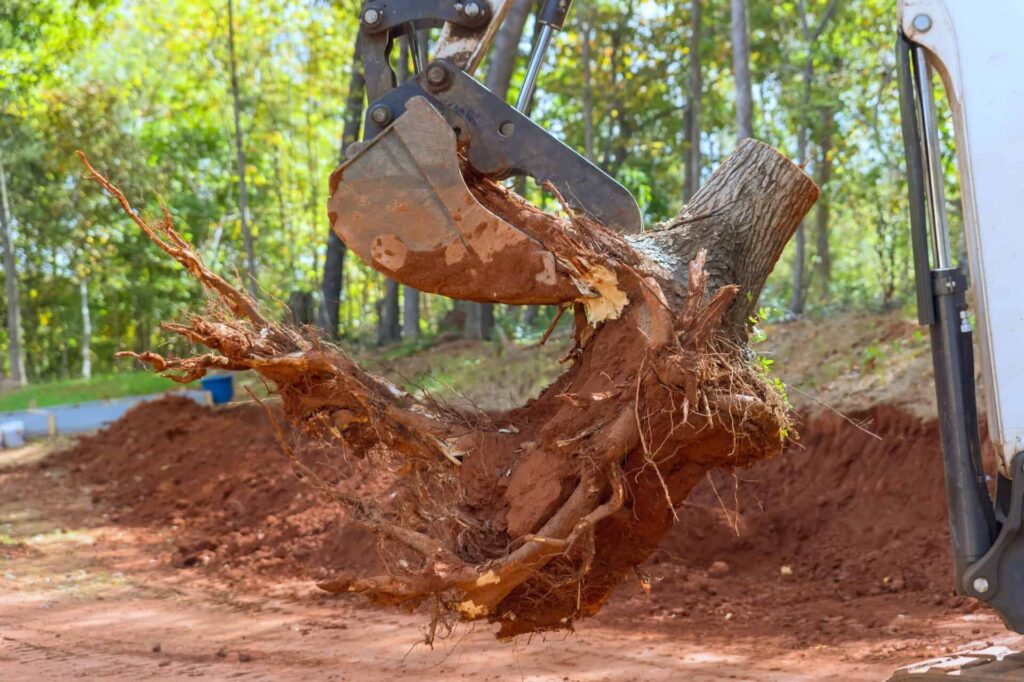
Quick checklist if you are deciding right now
If any of these are true, DIY is a bad idea:
- The tree is near powerlines.
- The tree overhangs a roof, shed, pool, driveway, or neighbour’s yard.
- The block is sloped or access is tight.
- The tree is large, dead, or dropping limbs already.
- You would need to use a ladder with a chainsaw.
- You are not 100 percent confident about where each cut section will go.
That is basically most Sydney homes, honestly.
Wrap up, without the lecture
I am not here to scare you out of doing basic yard work. Pruning a small shrub, trimming a low limb with the right tool, sure. Plenty of homeowners do that safely.
But removing a tree is different. It is heavy, technical, and unforgiving. Sydney blocks are close together, and that amplifies the consequences.
So if you want the safer route, the calmer route, the route where you are not lying awake thinking about that one cut you made too high, arborist-led tree removal is the move.
And if you do hire someone, do not be shy about asking questions. Ask how they will dismantle it, what they will do about nearby structures, how they will manage lowering, and what the cleanup looks like. A good arborist will explain it in plain language. No weird attitude. Just a plan.
That is what safety looks like. A plan. And the experience to follow it.
More to Read : How to Find the Best Sydney Tree Pruning Companies (And Avoid the Rest)