A tree removal company is responsible for much more than cutting a trunk. The crew must assess the tree, control heavy timber, protect buildings, work safely at height and manage organic waste. On Sydney properties, trees are often close to roofs, pools, retaining walls, cars and neighbouring homes. A removal that looks simple from the footpath may require climbing, ropes, specialised equipment and a carefully planned sequence.
This guide explains how to compare a tree removal company, what should happen before the first cut, how council approval fits into the process and why the cheapest quote can become the most expensive option.
When Removal Is Justified
A healthy tree should not be removed simply because it is large. Removal may be appropriate where there is severe decay, a split trunk, an unstable root plate, major storm damage or a location that makes the risk impossible to manage. Development can also create a legitimate reason, although planning approval, tree protection measures or replacement planting may apply.
Ask what alternatives were considered. Deadwooding, crown reduction, selective removal of a defective stem, cabling, bracing or a habitat-pole reduction may reduce risk while retaining part of the tree. A good tree removal company explains these options even when full removal is ultimately recommended.
For a disputed or expensive decision, obtain an independent arborist assessment. Do not rely only on the contractor who will profit from the removal.
Site Assessment Before the Quote
The contractor should inspect the tree, surrounding structures and access. Important details include species, height, trunk diameter, lean, cavities, included bark, root disturbance and signs of fungal decay. The crew should identify targets such as roofs, windows, pools, power lines, fences, footpaths and parked vehicles.
Access affects the entire method. Can a truck and chipper reach the tree? Is there room to lower branches? Can a crane be positioned safely? Will a fence panel need temporary removal? Are there underground services near the stump? A professional quote reflects these questions.
Send photographs when requesting an initial discussion, but do not treat a complex removal as a fixed online purchase. Hidden defects and difficult access are common reasons for variation.
Approval and Council Controls
Most Sydney councils have controls for trees on private land. The requirements vary by species, height, trunk diameter, location and local planning instruments. The NSW Government tree-removal referral page is a useful first step, followed by the council’s own application guidance.
A tree removal company should raise the approval issue before quoting. If a report is required, confirm whether it will be prepared by an appropriately qualified consulting arborist. If a tree is dead or immediately dangerous, take photographs before work and keep the written assessment supporting the urgent response.
Never assume a protected tree becomes exempt because it is inconvenient. Unauthorised work can lead to fines, replacement requirements and difficulty during a property sale.
How Professional Removal Works
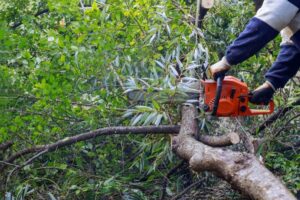
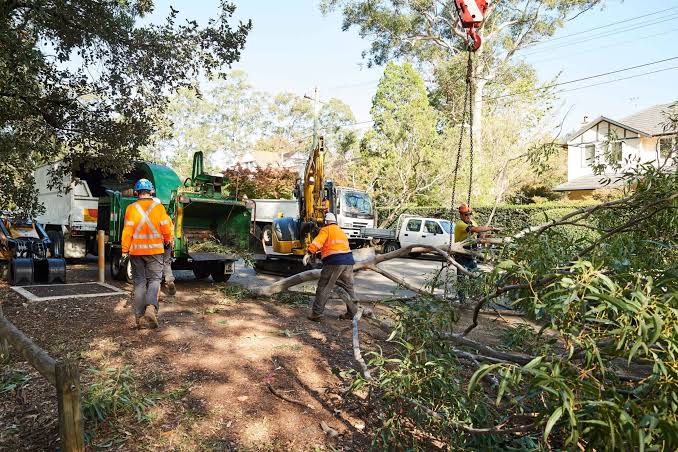
The crew begins by establishing an exclusion zone and protecting surfaces. In open space, a tree may be felled directionally if the drop zone and escape route are suitable. Near a house, the climber usually removes the crown in sections. Branches are attached to ropes, cut and lowered under control. Larger trunk sections may be rigged, winched or lifted by crane.
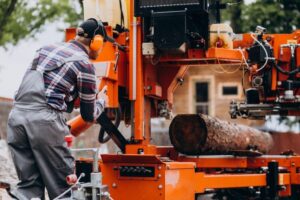
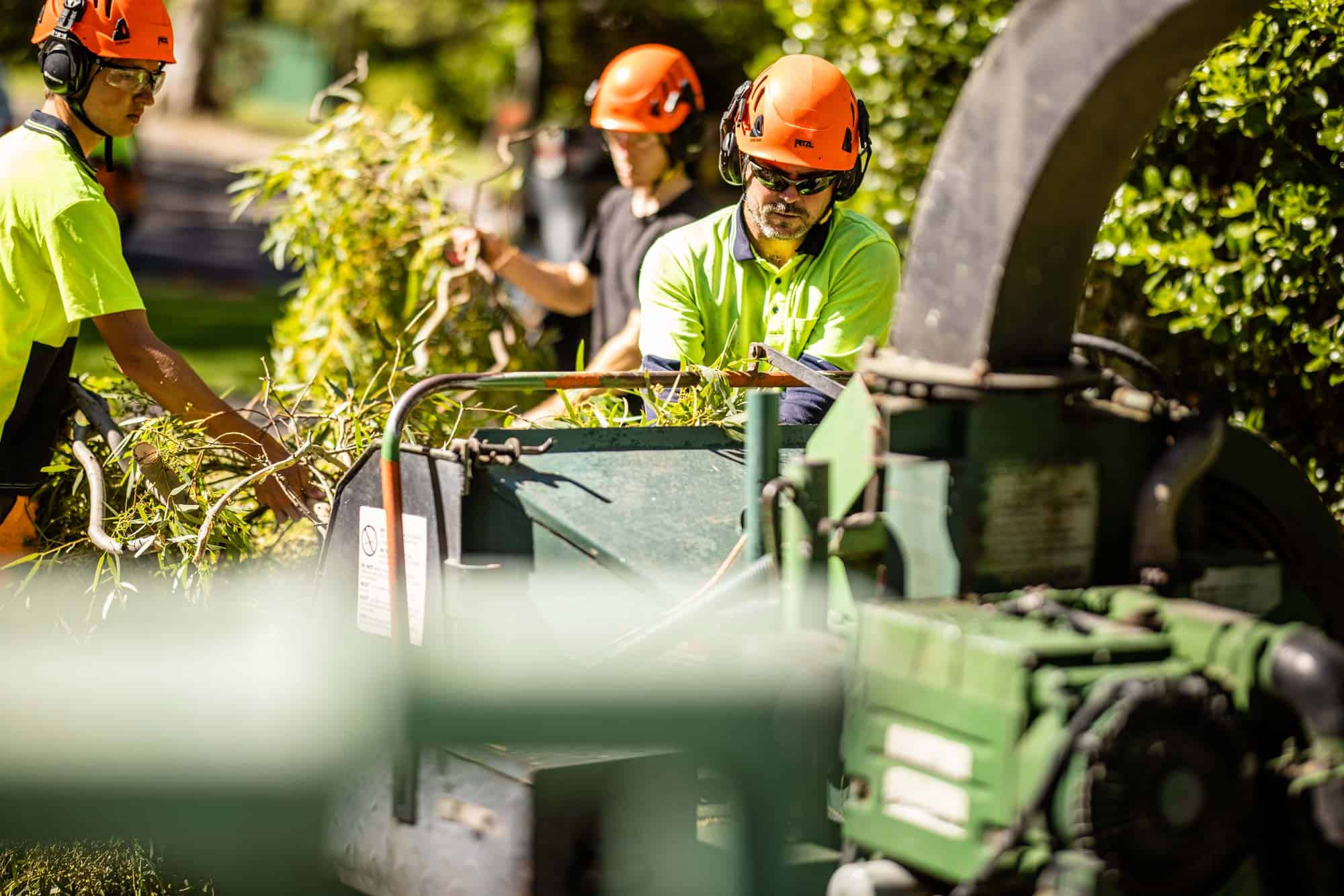
Brush is processed through a chipper and larger timber is cut into rounds. The site is then raked, blown down and checked for debris. Stump grinding is normally separate because it requires different equipment and a different scope.
The Safe Work Australia guide to managing tree-work risks covers falls, falling objects, lopping, removal, chipping and stump grinding. A safe contractor should use appropriate PPE, communication systems and exclusion controls.
What the Quote Should Include
A written quote should identify the tree or trees, describe the method and state what happens to brush, logs and the stump. Check whether chipping, disposal, raking and blowing are included. Confirm the grinding depth if you are adding stump work. Ask whether grindings are removed or left for you to spread.
Potential extras include crane hire, elevated work platforms, traffic control, road permits, fence access, council fees, soil backfill and turf repair. These should be listed clearly. If the contractor discovers hidden decay or an unexpected access issue, they should explain the variation before doing additional work.
Sydney Price Guide
A small tree in clear access may cost $400 to $900. Medium removals often range from $900 to $2,500. Large trees between homes or over roofs may cost $3,000 to $8,000. Very large, complex or crane-assisted removals can exceed $10,000.
Species and wood density affect labour. Ironbark, turpentine and mature figs are heavy and slow to process. Access can be more important than height. A tall tree in an open paddock may cost less than a shorter tree in a terrace courtyard. Disposal volume and emergency timing also affect the quote.
Ask for two or three quotes based on the same brief. Compare insurance, equipment, method, clean-up and disposal, not only the final number.
Insurance and Qualifications
Request a current public liability certificate and confirm the legal business name matches the quote. Workers compensation cover is important when employees or subcontractors are involved. Ask who will climb, who will supervise and who prepared any report submitted to council.
The University of Melbourne Graduate Certificate in Arboriculture demonstrates that tree management involves specialised study rather than ordinary garden maintenance. You do not need every worker to hold a university qualification, but you should expect relevant training and practical competence.
What Happens to the Tree Material?
A responsible tree removal company can often recycle most of the material. Clean branches become mulch, larger hardwood rounds can become firewood and remaining organics go to a licensed processor. Ask whether clean chip can stay on the property. Keep it away from trunks, walls and termite barriers, and do not mix large volumes into planting soil.
The NSW EPA garden-organics information explains the importance of lawful disposal. If a contractor cannot name the type of facility receiving the material, ask more questions before booking.
Red Flags
Avoid door-knocking operators who appear after storms, demand cash in advance or pressure you to sign immediately. Other warning signs include no written scope, no insurance, ladder chainsaw work, no exclusion zone, refusal to discuss council approval and promises to top the tree instead of explaining proper reduction.