Tree services Sydney residents search for can mean almost anything related to trees. One homeowner needs a branch cleared from a roof. Another needs a report for a development application. Someone else has a stormdamaged gum across a driveway, a stubborn stump in a lawn or a pile of branches too large for the green bin. Choosing the right service begins with understanding the options.
Sydney’s urban forest is valuable, but trees can also create hazards when they are poorly placed, damaged or neglected. Professional tree work should balance safety, tree health, council requirements and the condition of the surrounding property.
The Main Services Available
Tree inspection and arborist reports
A consulting arborist assesses structure, health, defects, risk and retention options. A formal report may be required for council, a development application, a neighbour dispute or an insurance matter. Ask about qualifications and whether the report is independent of the contractor who will perform the work.
Pruning and trimming
Pruning includes crown lifting, deadwooding, thinning, reduction, formative work and clearance from buildings. The correct method depends on the goal. “Trim it back” is not enough information for a safe quote.
Tree removal
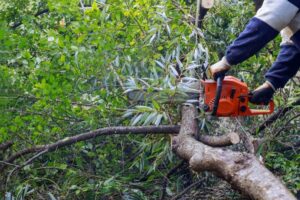
Removal may be appropriate when a tree has severe decay, unstable roots, irreparable storm damage or unavoidable construction conflict. Trees over houses and in tight yards are normally dismantled in sections with ropes rather than felled in one piece.
Stump grinding
Grinding removes the visible stump below grade. It is faster and less disruptive than excavation for most residential situations. The required depth depends on whether the area will be lawn, garden, paving or construction.
Mulch, firewood and green waste
Branches can become chip mulch, sound logs can become firewood and remaining organics can be composted. Ask whether these outcomes are included in the quote.
How to Describe Your Job
When contacting tree services Sydney businesses, provide the suburb, photographs, approximate height, access width and distance to buildings. Explain what concerns you: falling branches, roof contact, roots, shade, storm damage or planned construction. Avoid dictating a method unless a qualified professional has already assessed the tree.
A good contractor may recommend retaining the tree with targeted pruning. A poor contractor may agree to removal immediately because it is the largest invoice. Ask what alternatives were considered and why they were rejected.
Council Rules Across Sydney
Tree protection is managed through local council controls, so rules differ between the City of Sydney, Inner West, Parramatta, Blacktown, Ku-ring-gai, The Hills and other areas. Use the NSW Government tree-removal ref erral service as a starting point and then read your council’s current rules.
Species lists, height thresholds, pruning percentages, heritage controls and bushland overlays can all affect approval. A tree that looks dead may still require evidence. A tree on a nature strip is usually a council asset and should not be cut by a private contractor without permission.
Safety Expectations
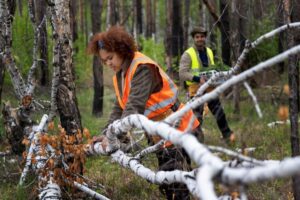
Tree work is not ordinary gardening. It involves falls from height, chainsaws, falling limbs, chippers, traffic and electrical hazards. The crew should plan an exclusion zone, protect surfaces and use equipment suited to the site. The Safe Work Australia tree-work guide covers the industry’s main risks.
Ask for public liability insurance, workers compensation cover and a written scope. Look for appropriate arboriculture training among the climbing crew. If the job is near power lines, confirm that the operator has the required capability and will follow electrical approach requirements.
Understanding Quotes
A complete quote names the trees, the service, the proposed method, equipment, disposal and clean-up. It says whether stumps, grindings, logs, traffic control, cranes, fence access and council fees are included. It also explains how variations are handled.
Indicative prices vary widely. Light pruning may cost $250 to $700. Medium tree work commonly falls between $700 and $2,500. Large trees with rigging or cranes may exceed $8,000. Stump grinding ranges from about $120 for small stumps to more than $2,000 for very large hardwood or fig stumps.
Access is one of the strongest price drivers. A chipper beside the tree saves time. A rear courtyard reached through a narrow passage adds labour. Heavy hardwood, overhead targets and disposal volume also increase cost.
Making a Better Environmental Decision
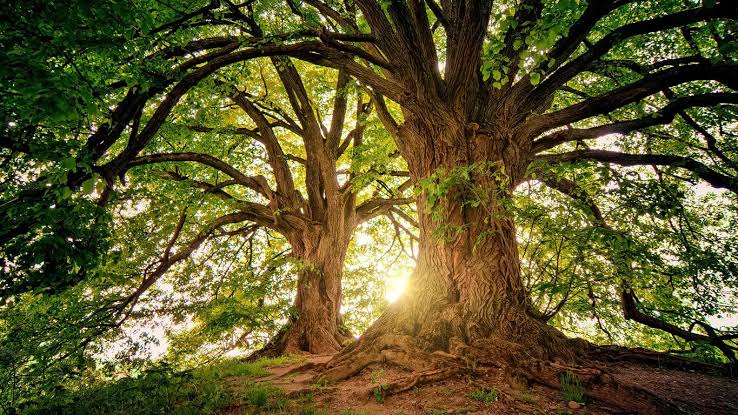
Removal should not be treated as the default response to shade, leaf litter or minor branch contact. Crown lifting, selective thinning, reduction, deadwooding and root-zone improvements may solve the problem while preserving canopy. Research from the University of Technology Sydney urban tree-canopy project helps explain why urban trees provide practical benefits such as shade and cooling.
When removal is necessary, ask whether chip can stay on site as mulch and whether suitable timber can be cut for firewood. The NSW EPA garden-organics guidance is useful when checking disposal arrangements. Do not accept a vague promise that waste will be “taken away.” Ask where it goes.
Seasonal Planning
Autumn is often a good time to schedule non-urgent pruning and removals before the next storm season. Winter can offer easier access and less heat stress, although firewood demand rises. Spring brings rapid growth and high demand for trimming. Summer storm events can create long queues for emergency crews.
Routine inspections before storm season are cheaper than emergency make-safe work. Look for dead limbs, hanging branches, cracks at unions, soil heaving and recent root disturbance. Only a qualified person should climb or test a suspect tree.
Red Flags
Avoid a business that quotes without viewing the property, recommends topping by default, cannot show current insurance or says council approval never applies. Be wary of cash-only deals, aggressive discounts and crews who begin work before confirming the scope. A professional should also leave the property reasonably clean and safe.